
CVT Transmission Buying Guide: Choose the Right Type for Your Vehicle
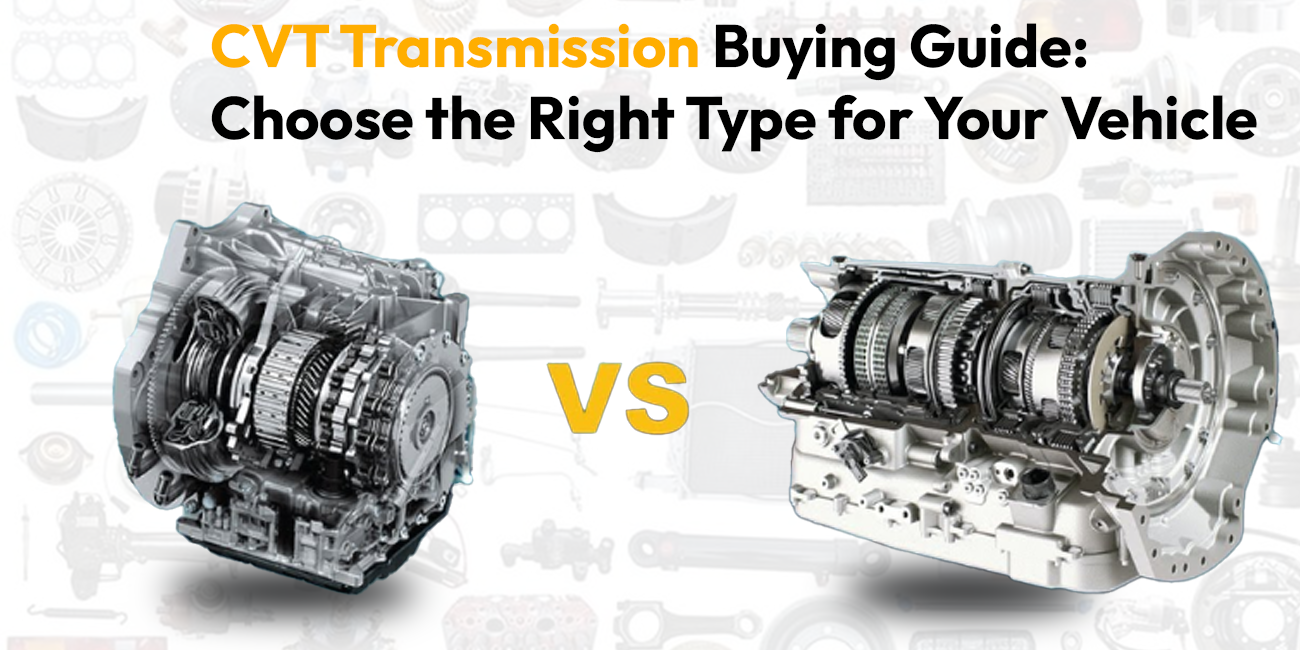
If you have ever wondered what makes modern cars shift so smoothly, the answer often lies in the CVT transmission. A CVT transmission, or Continuously Variable Transmission, provides seamless acceleration by automatically adjusting through infinite gear ratios, keeping your engine at peak efficiency.
Unlike traditional transmissions, a CVT transmission delivers steady power and optimal fuel economy, making it a preferred choice for many modern vehicles. Understanding how CVT systems work, the difference between CVT and automatic transmission, and the CVT pros and cons will help you make the best decision for your vehicle. This article covers everything you need to know about CVT transmission technology and how CVT mainstream adoption is shaping the future of automotive design.
What s a CVT Transmission
A CVT transmission is a type of automatic gearbox that uses pulleys and belts instead of a fixed number of gears. Instead of switching from one gear to another, the CVT continuously adjusts its ratio for smooth, uninterrupted acceleration. The result is a driving experience without noticeable gear changes, giving you consistent power delivery.
The CVT transmission technology has gained widespread popularity among automakers such as Honda, Nissan, Toyota, and Subaru. It is especially useful for compact vehicles and hybrids, where efficiency and reliability are key.
How a CVT Transmission Works
The CVT transmission operates using two pulleys connected by a high-strength steel or composite belt. One pulley is linked to the engine, while the other connects to the drive wheels. As the car accelerates or decelerates, the pulleys expand or contract to change the gear ratio continuously.
Step-by-Step Operation
When you press the accelerator, the drive pulley narrows while the driven pulley widens.
The belt moves smoothly between these pulleys, altering the ratio without traditional gear changes.
The transmission automatically finds the optimal engine speed (RPM) for power and efficiency.
This allows for smoother acceleration, improved fuel economy, and lower emissions.
This constant adjustment is the reason CVT mainstream adoption is growing, particularly in hybrid and fuel-efficient models.
Difference Between CVT and Automatic Transmission
Knowing the difference between CVT and automatic transmission can help you make a better choice for your driving needs.
Automatic transmissions have a set number of gears that change step by step. In contrast, a CVT transmission provides uninterrupted acceleration. Drivers who prefer smooth performance and efficiency often prefer CVTs, while those who enjoy a more mechanical feel tend to favor traditional automatics. Understanding this difference between CVT and automatic transmission helps determine which type aligns best with your driving style.
CVT Transmission Pros and Cons
Advantages of CVT Transmission
Improved Fuel Efficiency: Keeps the engine in its most efficient operating range, reducing fuel consumption.
Smooth Acceleration: Eliminates sudden gear changes, providing a seamless driving experience.
Compact Design: Fewer components result in lighter weight and more efficient power use.
Enhanced Comfort: Ideal for city driving and traffic conditions where stop-and-go motion is frequent.
Reduced Mechanical Complexity: The system adjusts ratios automatically without multiple gears.
Disadvantages of CVT Transmission
Higher Repair Costs: CVTs require specialized service and parts.
Reduced Sporty Feel: Lacks the shifting sensation of traditional gearboxes.
Durability Concerns: Prolonged high-load use can wear belts and pulleys faster.
Potential Noise Issues: Some CVTs can produce a steady droning sound at high RPMs.
Understanding the CVT pros and cons helps buyers and owners decide whether a CVT is right for their vehicle and lifestyle. At OEMTRONIC, customers can find high-quality, tested used CVTs that deliver performance at a fraction of new-unit prices.
CVT Transmission Technology in Today’s Automotive Industry
The introduction of CVT transmission technology has transformed the automotive landscape. Designed to optimize both power and efficiency, it is now a preferred choice for fuel-conscious consumers and eco-friendly car manufacturers.
Why Automakers Use CVT Transmission Technology
Fuel Economy: Provides up to 15 percent better efficiency compared to standard automatics.
Lower Emissions: Keeps engines running at optimal RPMs for reduced exhaust output.
Performance Control: Enables better control and smoothness in hybrid powertrains.
Adaptability: Works efficiently with both small engines and hybrid systems.
Popular Automaker CVT Systems
As innovation continues, CVT mainstream adoption is expected to expand into midsize sedans, SUVs, and electric-assisted vehicles.
Maintenance, Longevity, and Replacement Tips
Proper maintenance ensures that a CVT transmission performs efficiently for many years. Neglecting fluid changes or driving aggressively can reduce its lifespan.
Maintenance Recommendations
Change CVT Fluid Regularly: Follow your manufacturer’s recommendation, typically every 60,000 miles.
Use OEM-Approved Fluid: CVT fluid is unique and must match the manufacturer’s specification.
Avoid Rapid Acceleration: This minimizes stress on belts and pulleys.
Check for Warning Signs: Look for slipping, whining noises, or delayed acceleration.
Expected Lifespan Chart
OEMTRONIC provides tested, warranty-backed used CVT transmissions that serve as cost-effective replacements without compromising reliability.
How to Buy a Reliable Used CVT Transmission
Choosing a replacement CVT transmission requires careful consideration of compatibility and quality. OEMTRONIC simplifies this process with a nationwide supplier network and professional-grade testing.
Steps to Buy a Used CVT Transmission
Identify Your Vehicle Details: Know your car’s make, model, and VIN to ensure an accurate match.
Find a Trusted Supplier: OEMTRONIC partners with more than 180 salvage yards across the country.
Verify Warranty and Testing: Each CVT transmission is inspected, tested, and sold with a standard 90-day warranty.
Enjoy Fast and Secure Delivery: Shipping options include liftgate services for safe handling. With OEMTRONIC, customers gain access to a wide inventory of high-quality transmissions at competitive prices.
CVT vs Automatic Transmission Comparison Chart
The difference between CVT and automatic transmission is clear when comparing performance and driving experience. While automatics appeal to traditional drivers, CVTs excel in efficiency and modern comfort.
The Future of CVT Mainstream Adoption
The global automotive market continues to move toward CVT mainstream adoption. Automakers are embracing this technology to meet new fuel economy standards and improve driver experience.
Reasons for Continued Growth
Environmental Regulations: Reduced emissions targets favor efficient drivetrains.
Hybrid Integration: CVTs blend seamlessly with electric motors.
Consumer Demand: Drivers prefer smoother rides and better fuel savings.
Lower Production Costs: Manufacturers can produce CVTs more efficiently than complex automatics.
Today, nearly one-third of new cars in the U.S. are equipped with CVTs. As the technology matures, it will likely become the dominant transmission type in hybrid and electric vehicles.
Frequently Asked Questions
1. What is a CVT transmission?
A CVT transmission, or Continuously Variable Transmission, uses a belt-and-pulley system to provide infinite gear ratios for smooth acceleration and improved fuel efficiency.
2. Is a CVT transmission better than a traditional automatic?
For fuel economy and comfort, yes. CVTs provide seamless power delivery, while automatics offer a more mechanical, stepped feel.
3. What are the CVT pros and cons?
Pros include better efficiency, smoother driving, and compact design. Cons involve higher repair costs and less sporty performance.
4. How long does a CVT transmission last?
Typically between 100,000 and 150,000 miles, depending on maintenance and driving habits.
5. Can I replace a CVT transmission with a used one?
Yes. Buying a tested used CVT from OEMTRONIC is a reliable and cost-effective option for replacement.
6. What is the main difference between CVT and automatic transmission?
A CVT adjusts ratios continuously for smooth performance, while an automatic shifts between fixed gears.
7. Which car brands use CVT transmission technology?
Popular manufacturers include Honda, Toyota, Nissan, and Subaru, especially in hybrid and compact vehicles.
Its growth is driven by demand for fuel efficiency, environmental standards, and smoother vehicle performance.
Conclusion
The CVT transmission represents a key advancement in automotive engineering, offering superior fuel efficiency, smooth performance, and long-term reliability. While the CVT pros and cons depend on driving style and maintenance, the technology is becoming more refined every year. Understanding the difference between CVT and automatic transmission helps drivers make smarter decisions when purchasing or replacing vehicles.
For those seeking affordable, tested, and reliable CVT replacements, OEMTRONIC provides an extensive selection of quality used transmissions backed by warranty and fast shipping. Whether you are upgrading, repairing, or replacing your CVT transmission, OEMTRONIC ensures top performance and customer satisfaction.
Shop used CVT transmissions today and experience the OEMTRONIC difference.
Recent Posts
Fiat OEM Parts USA Guide: Genuine Replacement Parts Every Fiat Owner Should Know
Lennox OEM Part Guide: How to Find Genuine HVAC Replacement Parts in the USA
Used Lennox OEM Part: Find Repair Parts Easily with the New Repair Part Finder in the USA
OEM Parts Online Reviews: See What Real USA Buyers Are Saying Before Ordering
OEM vs Aftermarket Parts: Complete USA Guide to Differences, Quality, Cost & Best Choice
Maserati OEM Parts USA: Buy Genuine Maserati Spare Parts Online

The goal at Oemtronic Auto Parts is to connect buyers across the internet looking for auto parts with one of the largest network of salvage yards online. We want to streamline and economize the auto parts buying process by offering you the most up to date online buying experience.